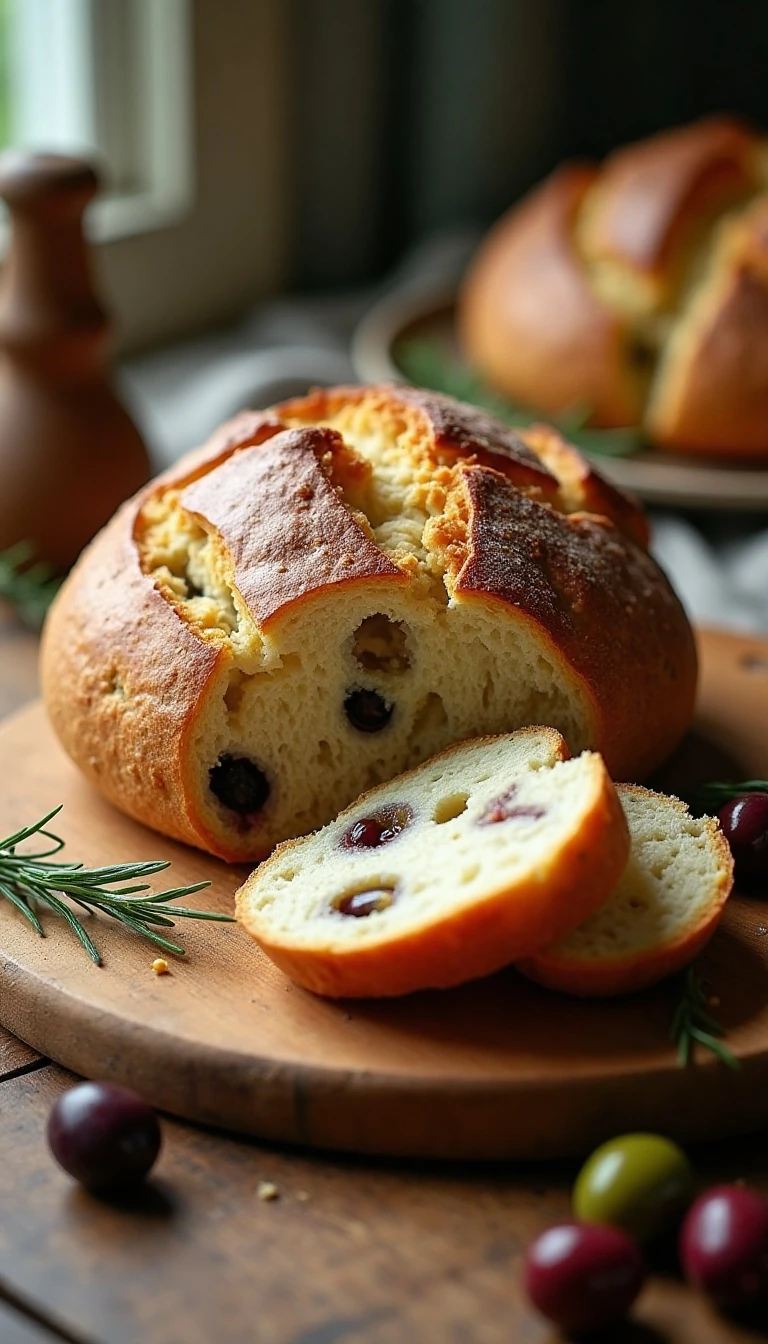
Ingredients
Method
Step-by-Step
- In a large bowl, stir together the flour, salt, and yeast. Add the room-temperature water and mix with a sturdy spoon until no dry flour remains and a shaggy, sticky dough forms.
- Fold in the patted-dry chopped olives and any optional rosemary, thyme, garlic, or lemon zest. Mix just enough to distribute everything; there is no kneading required.
- Cover the bowl tightly and leave it at room temperature for 12–18 hours. The dough is ready when it looks expanded, bubbly, and loose.
- Turn the dough onto a well-floured surface. Fold the edges toward the center and gently shape the dough into a round, taking care not to press out all of its air.
- Set the dough seam-side down on parchment or a heavily floured towel. Cover and let it rest for 30–60 minutes while the oven and Dutch oven preheat.
- Place a 4- to 6-quart cast-iron Dutch oven and its lid in the oven. Preheat to 450°F (230°C) for at least 30 minutes.
- Use the parchment as a sling to carefully lower the dough into the hot Dutch oven. Cover immediately and bake for 30 minutes.
- Remove the lid and continue baking for 15–20 minutes, until the loaf is deeply golden brown. If checked with an instant-read thermometer, the center should register approximately 205–210°F (96–99°C).
- Transfer the loaf to a wire rack and cool for at least 1 hour before slicing. This resting time allows the crumb to finish setting and keeps the slices from becoming gummy.
Notes
Pat olives thoroughly dry because excess brine or oil can make the dough wetter and reduce its rise. Taste the olives before mixing and do not increase the salt, since many olives are already quite salty. A fully preheated Dutch oven is important because its covered interior traps steam and helps create a thin, crisp crust.