Ingredients
Method
Step-by-Step
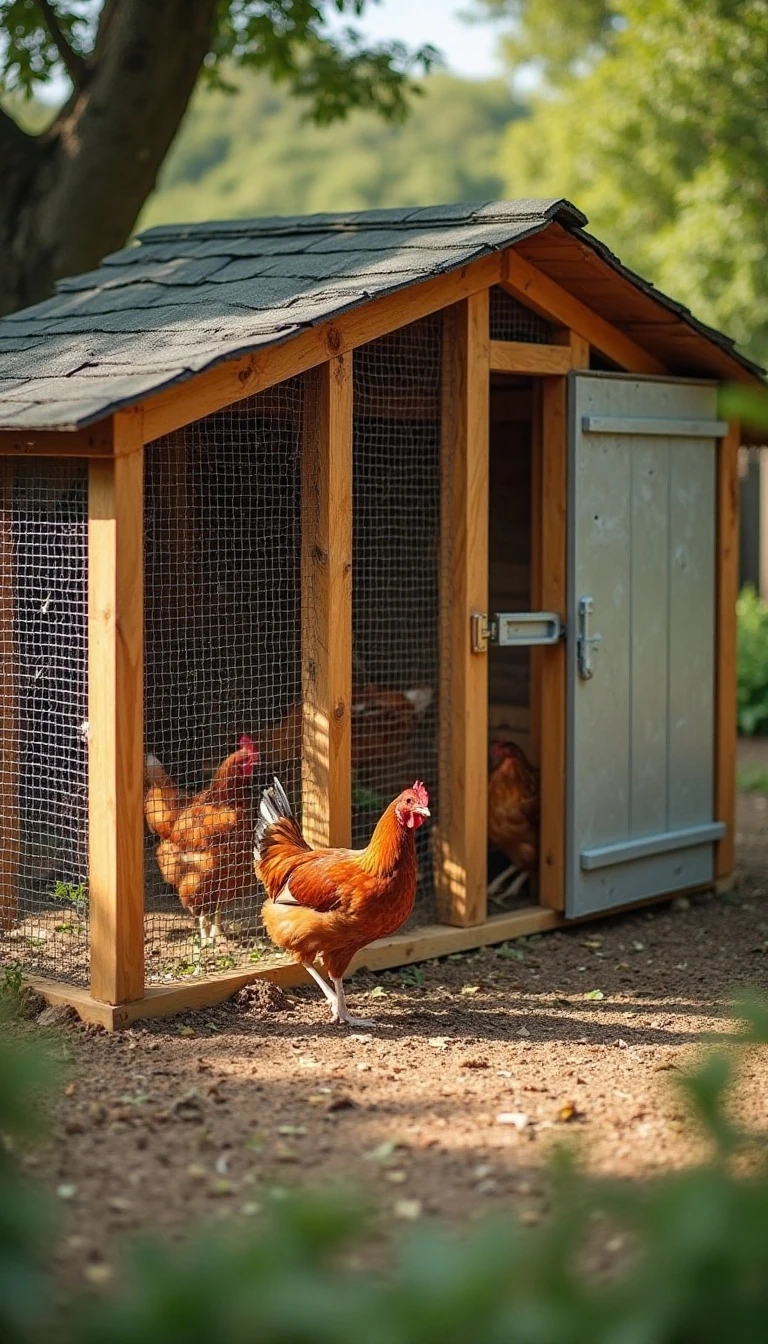
- Choose a well-drained location near the coop, allowing enough room for the hens and convenient daily access.
- Build a sturdy frame sized for the number of hens, using lumber or metal that can support the mesh and roof.
- Attach galvanized welded-wire hardware cloth to all sides and the top, securing it with predator-resistant fasteners.
- Bury the mesh around the perimeter or extend it outward along the ground to discourage predators from digging underneath.
- Install a properly fitted door with hinges and a secure two-step or locking latch.
- Add shade, roofing, weather protection, and safe, accessible locations for feed and water.
- Inspect the enclosure regularly for gaps, corrosion, loose fasteners, and signs of digging.
Notes
Ordinary chicken wire is not considered predator-proof because determined predators can tear it. Exact quantities cannot be stated accurately without planned run dimensions, flock size, climate, and predator risk.