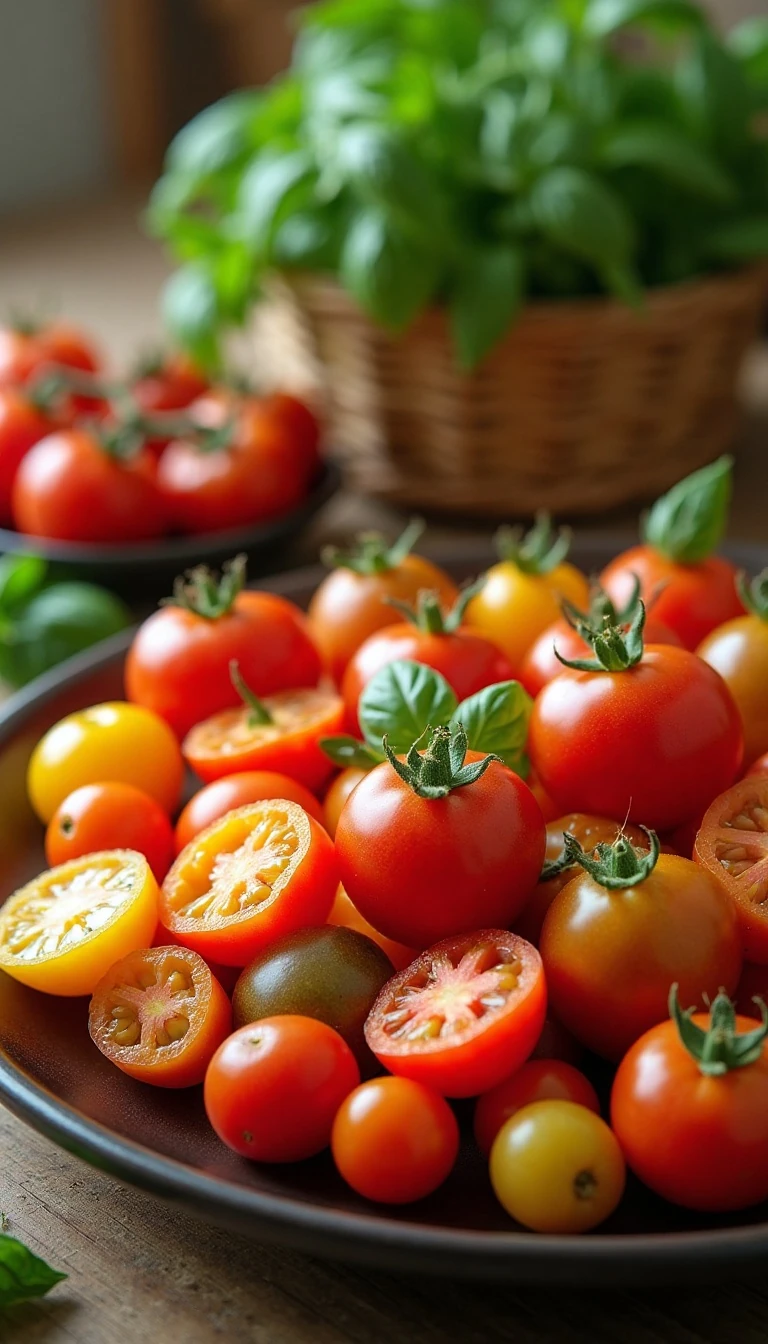
Ingredients
Method
Step-by-Step
- Choose a productive tomato variety that matches your local climate and growing season. Indeterminate varieties are especially useful when vines will be trained upward, but the final choice should also suit your available sunlight and expected weather.
- Prepare a fertile, well-drained 20-square-foot bed several weeks before planting. Work mature compost into the soil and use additional soil amendments only when a soil test or local guidance shows they are needed.
- Wait until the danger of frost has passed before planting. Set each tomato deeply, removing the lower leaves so part of the stem is underground; buried stems can form additional roots.
- Install stakes, cages, or trellises at planting time so growing roots are not disturbed later. Keep the support strong enough for heavy vines and clusters of fruit.
- Train vines upward with soft ties and prune according to the variety and your chosen system. When using a single- or double-leader system, remove unwanted suckers regularly while retaining healthy growth needed for fruit production.
- Apply a 2–3-inch layer of organic mulch around the plants, leaving a little space around each main stem. Mulch helps conserve moisture, reduce weeds, and limit soil splashing onto foliage.
- Water consistently at the soil line rather than wetting the leaves. Aim for roughly 1–1½ inches per week, adjusting for rainfall, heat, and soil type, and feed during the season according to soil fertility and the fertilizer label.
- Inspect plants often and harvest ripe tomatoes regularly. Picking fruit promptly encourages continued production and gives you an opportunity to notice pest, disease, or watering problems before they spread.
Notes
Avoid excessive nitrogen, which can produce lush foliage at the expense of fruit. The 100-pound target is ambitious and depends on variety, spacing, sunlight, soil, weather, pest pressure, and growing-season length.