This easy maple glazed pork loin recipe makes a tender, juicy dinner for six with a sweet-savory glaze of pure maple syrup, Dijon mustard, apple cider vinegar, brown sugar, garlic, and thyme. Roast a 2 1/2- to 3-pound boneless pork loin at 375°F (190°C), brushing it with glaze as it cooks, and remove it when the thickest part reaches 145°F (63°C).
The finished pork is richly browned on the outside, moist in the center, and coated in a glossy glaze that balances maple sweetness with mustard tang and a gentle garlic-herb flavor. With only 10–15 minutes of preparation and about 50–65 minutes of cooking, it is an impressive yet practical dinner for a weeknight, Sunday supper, or holiday table.
Jump to RecipeWhy You’ll Love This Recipe
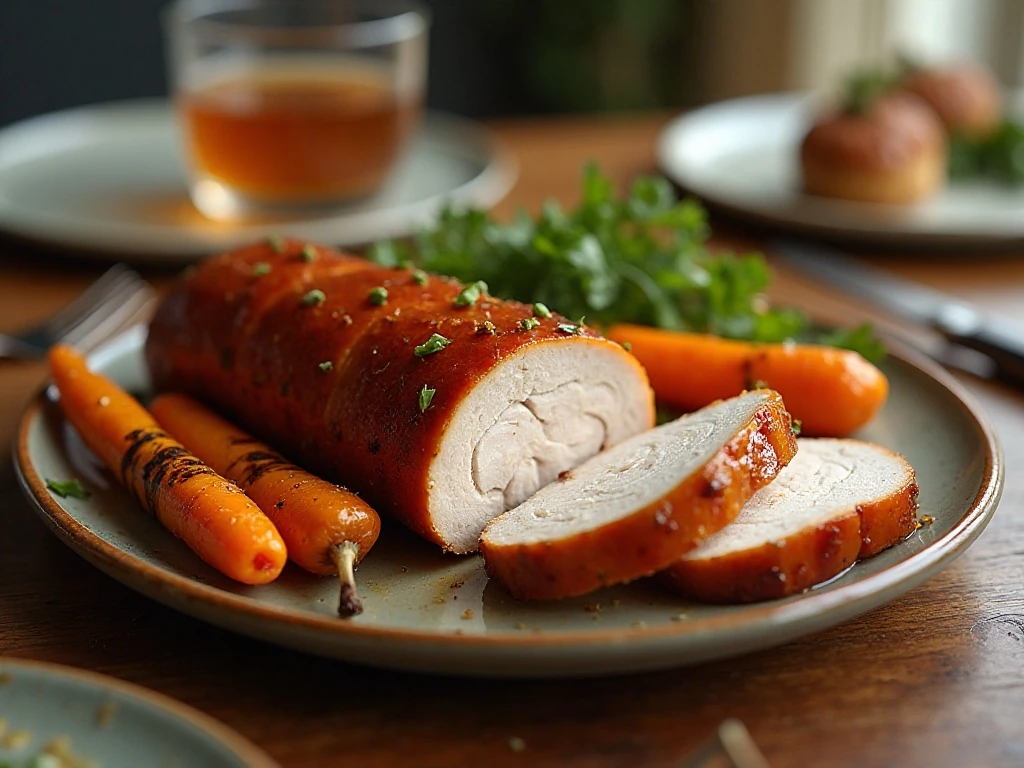
This maple glazed pork loin brings together the best parts of a special roast dinner without requiring complicated preparation. The pork needs only a quick seasoning, while the glaze comes together in one bowl with ingredients that are easy to keep in the pantry and refrigerator.
Pure maple syrup gives the roast a mellow sweetness, while Dijon mustard and cider vinegar keep the flavor bright rather than heavy. Garlic and thyme add savory depth, and the brown sugar helps the glaze cling to the pork and become beautifully glossy in the oven.
The optional sear creates a flavorful brown crust before roasting, but the recipe remains delicious if you skip that step. For another pork dinner idea with a similar sweet-savory appeal, take a look at our maple-glazed pork chops.
Ingredients You’ll Need
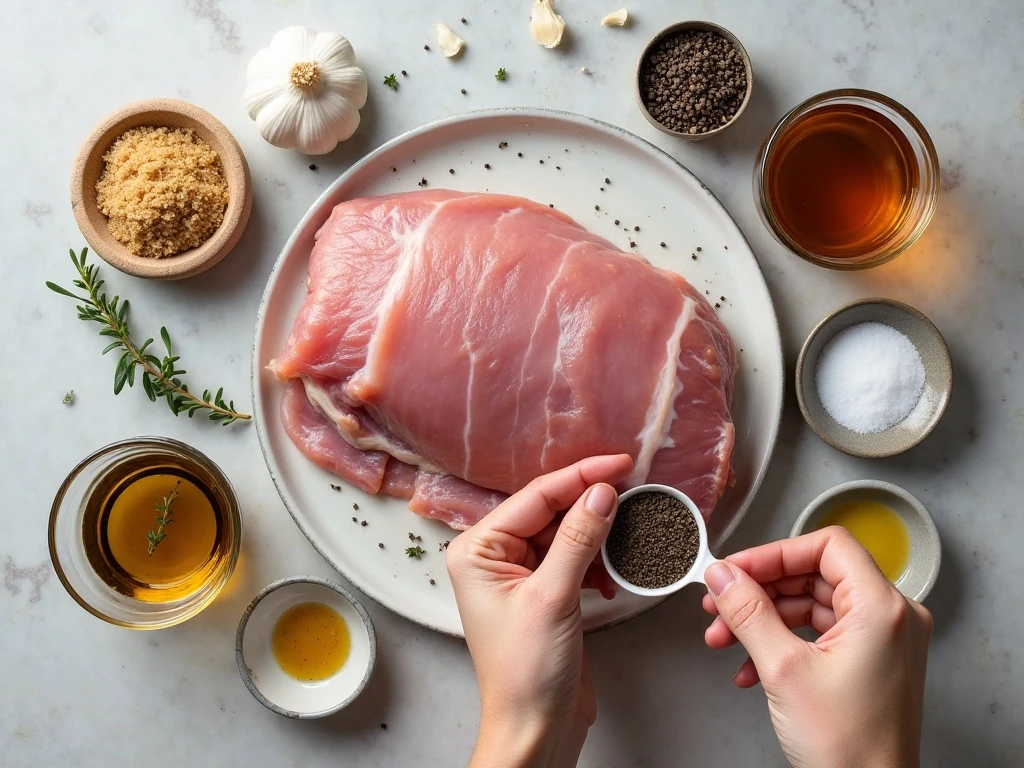
The main ingredient is a 2 1/2- to 3-pound boneless pork loin roast. Choose pork loin rather than pork tenderloin: loin is a larger, wider roast and needs substantially more time in the oven.
- Boneless pork loin: The roast should be trimmed of excess surface fat but still have enough natural moisture to stay juicy.
- Olive oil: Helps the salt and pepper adhere and supports browning during the optional sear.
- Kosher salt and black pepper: These season the meat itself before the glaze is added.
- Pure maple syrup: Use real maple syrup for the cleanest maple flavor and a smooth glaze.
- Dijon mustard: Adds tang and balances the sweetness.
- Apple cider vinegar: Brings acidity that keeps the sauce lively.
- Brown sugar, garlic, and thyme: These round out the glaze with caramel notes, savory aroma, and herbal character.
Gather the glaze ingredients before you start cooking. Because the roast cooks fairly quickly once it is in the oven, having everything measured makes brushing the pork at the right moments much easier.
How to Make It Step-by-Step
Step 1: Heat your oven to 375°F (190°C). Pat the pork completely dry with paper towels, then trim away excess surface fat without cutting deeply into the roast. Rub the entire pork loin with olive oil, kosher salt, and freshly ground black pepper.
Step 2: Make the glaze by whisking the maple syrup, Dijon mustard, apple cider vinegar, brown sugar, minced garlic, and thyme in a small bowl. Continue whisking until the brown sugar is distributed and the mixture looks smooth.
Step 3: If you want a deeper brown crust, place an ovenproof skillet over medium-high heat and sear the seasoned pork for 2–3 minutes per side. Searing is optional, and the roast can go directly into a roasting pan if you prefer a simpler preparation.
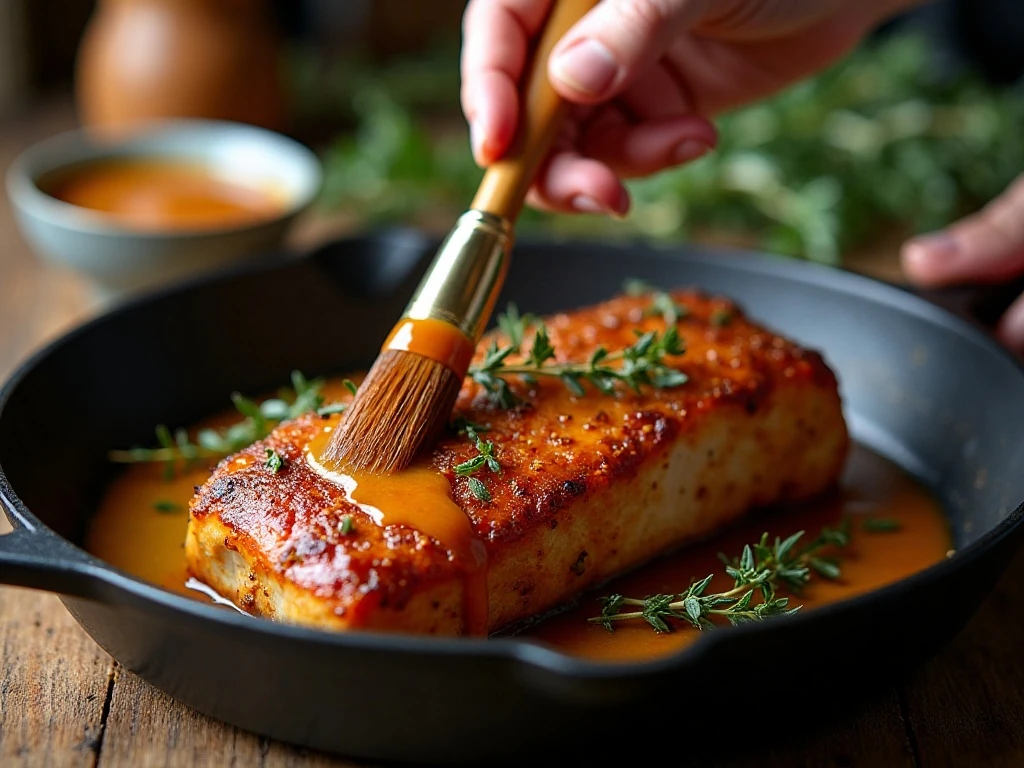
Step 4: Brush the pork generously with about half of the maple glaze. Set the roast in the roasting pan or ovenproof skillet, arranging it so the thickest section is exposed to the center of the pan.
Step 5: Roast the pork for approximately 45–60 minutes, depending on the thickness of the roast. Brush on more glaze once or twice during cooking, but save some for later in the roasting time so the maple and brown sugar do not scorch.
Step 6: Begin checking the pork with an instant-read thermometer as it approaches the end of the cooking range. Insert the thermometer into the thickest part, avoiding the pan and any pockets of fat, and remove the roast when it reaches 145°F (63°C).
Step 7: Tent the cooked pork loosely with foil and let it rest for 10 minutes. This pause gives the juices time to settle, making the slices noticeably moister and easier to cut.
Step 8: Slice the pork across the grain into serving pieces. Spoon the pan juices over the slices, then bring the platter to the table while the glaze is still warm and glossy.
How to Prevent Dry Pork Loin

The most important rule is to cook by temperature rather than by time alone. Pork loin is lean, and even a few extra minutes can take it from juicy to dry, especially when the roast is smaller or unusually narrow.
A 2 1/2- to 3-pound roast generally fits within the stated roasting range, but thickness matters more than weight. Start checking before 60 minutes, and trust the thermometer when the thickest part reaches 145°F (63°C).
Resting is part of the cooking process, not an optional extra. The 10-minute rest allows the heat and juices to distribute through the meat while the foil tent keeps the surface from cooling too quickly.
For a savory variation, some cooks replace the kosher salt with soy sauce in the glaze. That approach changes the recipe’s balance, so use it as an alternative rather than adding soy sauce in addition to the listed salt.
If you enjoy pressure-cooker pork dinners, our Instant Pot pork chops recipe is another useful option for your dinner rotation.
Best Side Dishes to Serve
The maple glaze pairs especially well with vegetables and starches that can catch the sweet pan juices. Keep the sides simple so the pork remains the centerpiece.
- Roasted carrots or sweet potatoes complement the maple flavor.
- Green beans, broccoli, or Brussels sprouts provide a fresh, savory contrast.
- Mashed potatoes or buttered egg noodles are ideal for spooning with pan juices.
- A crisp apple and cabbage salad adds cool crunch and a touch of acidity.
- Warm dinner rolls are helpful for mopping up any remaining glaze.
For a relaxed family meal, serve the sliced pork on a large platter with vegetables around the edges. For a more polished dinner, drizzle the juices over each portion and add a few fresh thyme leaves just before serving.
Storage, Reheating, and Leftovers
Let leftovers cool, then place the sliced pork in an airtight container and refrigerate it for up to 3 days. Store the meat with any remaining pan juices so it retains as much moisture as possible.
Reheat gently in a covered skillet or baking dish with a spoonful of juices. Use moderate heat and warm the slices only until heated through, since prolonged high heat can dry the lean pork.
Leftover slices are excellent in sandwiches with sharp cheese and mustard, tucked into grain bowls with roasted vegetables, or chopped into a warm salad. If you are planning a full meal from appetizer through dessert, consider adding an easy taco pie to a separate casual dinner menu rather than pairing two heavy main dishes at once.
Chef Tips for a Beautiful Glaze
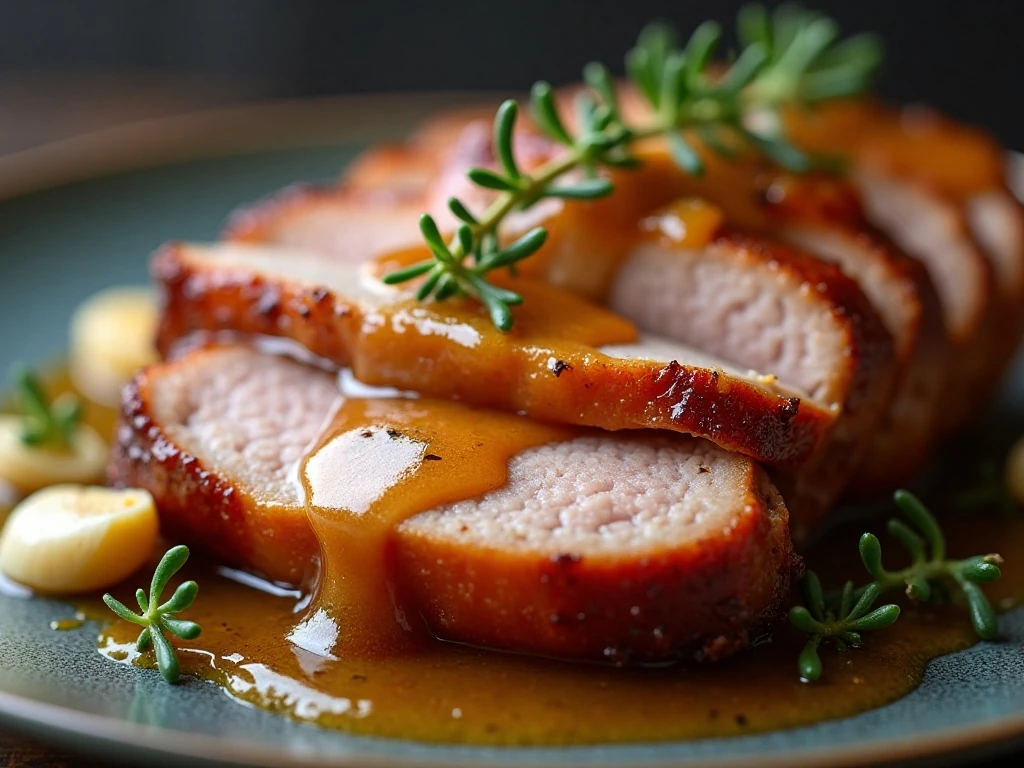
Brush the first layer of glaze over the pork before roasting so the meat begins absorbing its flavor. Add later layers during the cooking process, particularly near the end, when the syrup and brown sugar can caramelize without spending too long against the hot pan.
Dark roasting pans can brown the glaze quickly, so watch the surface closely. If the pork is browning faster than expected, loosely tent it with foil while allowing the center to continue cooking to the required temperature.
Use an ovenproof skillet for both searing and roasting when possible. It reduces cleanup and leaves flavorful browned bits beneath the pork, which mingle with the glaze and create especially tasty pan juices.
Slice only after the full 10-minute rest. Cutting immediately can release juices onto the cutting board instead of keeping them in the meat.
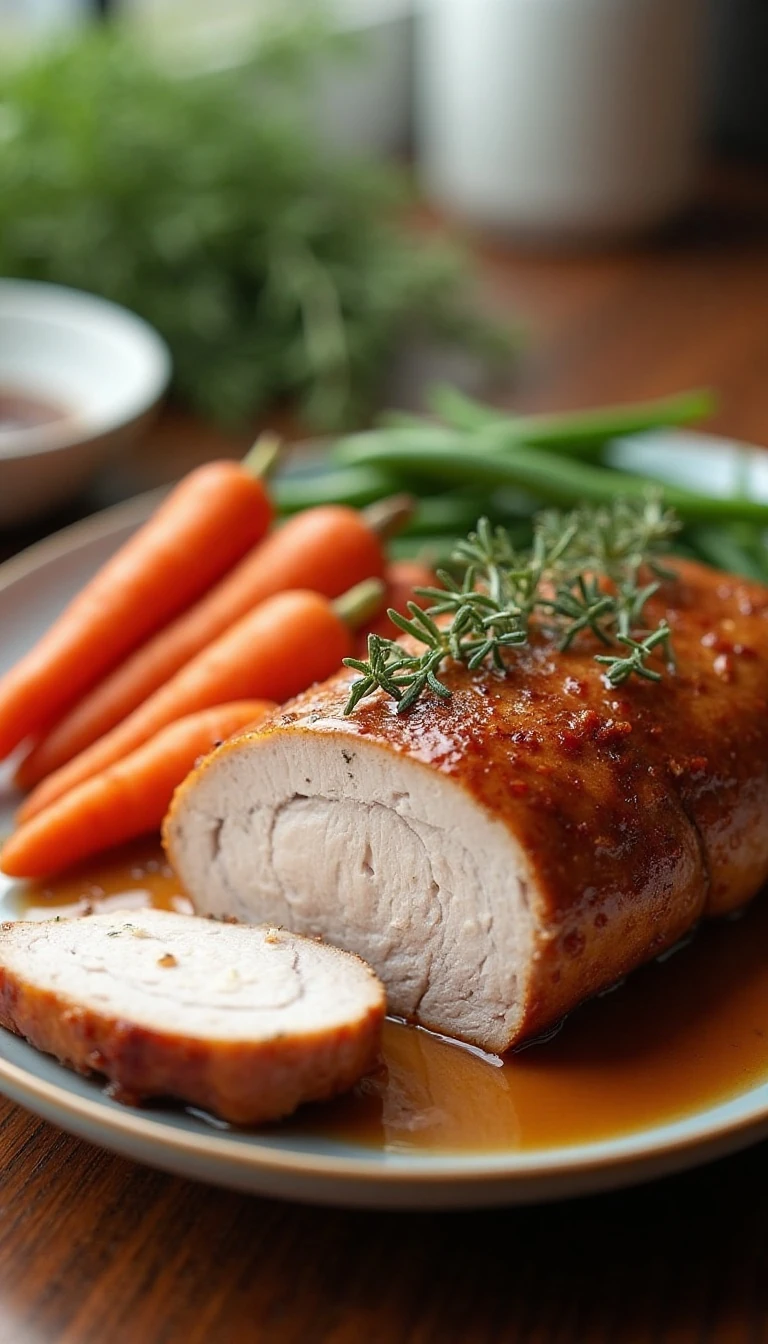
Easy Maple Glazed Pork Loin
Ingredients
Method
- Heat the oven to 375°F (190°C). Pat the pork loin dry with paper towels and trim away any excess surface fat. Rub the roast all over with olive oil, kosher salt, and freshly ground black pepper.
- In a small bowl, whisk together the pure maple syrup, Dijon mustard, apple cider vinegar, packed light brown sugar, minced garlic, and thyme until smooth and well combined.
- For extra browning, heat an ovenproof skillet over medium-high heat and sear the pork for 2–3 minutes per side. This step is optional, so you can place the seasoned roast directly into a roasting pan if preferred.
- Brush the pork generously with about half of the maple mixture. Place it in the roasting pan or ovenproof skillet, keeping the thicker side positioned toward the center of the pan.
- Roast for approximately 45–60 minutes, brushing the pork with more glaze once or twice during cooking. Since the roast’s thickness affects the cooking time, begin checking its temperature before the end of the range.
- Remove the pork from the oven when an instant-read thermometer inserted into the thickest part reaches 145°F (63°C). Avoid relying on time alone because pork loin is lean and can dry out if overcooked.
- Tent the roast loosely with foil and let it rest for 10 minutes before slicing. Spoon the pan juices over the slices and serve warm.
Notes
Final Thoughts
This easy maple glazed pork loin recipe is a dependable dinner with a polished finish. The combination of maple syrup, Dijon mustard, cider vinegar, garlic, thyme, and brown sugar creates a glaze that is sweet, tangy, savory, and deeply aromatic without overwhelming the pork.
Remember the key details: use boneless pork loin rather than pork tenderloin, roast at 375°F, brush the glaze in stages, and use an instant-read thermometer. Removing the roast at 145°F and resting it for 10 minutes is the best way to keep every slice tender and juicy.
Finish the meal with something light and refreshing, or save a sweet treat and coffee for later. Our whipped coffee recipe makes a fun after-dinner drink, while this blueberry cake with lemon frosting is a lovely choice when you want dessert.