This easy coconut custard pie recipe makes one creamy, classic 9-inch pie with a golden crust, sweetened shredded coconut, and a gently set vanilla custard. You will whisk together eggs, sugar, whole milk, melted butter, vanilla, and salt, then bake the pie first at 425°F and finish it at 350°F for a total baking time of 45–55 minutes.
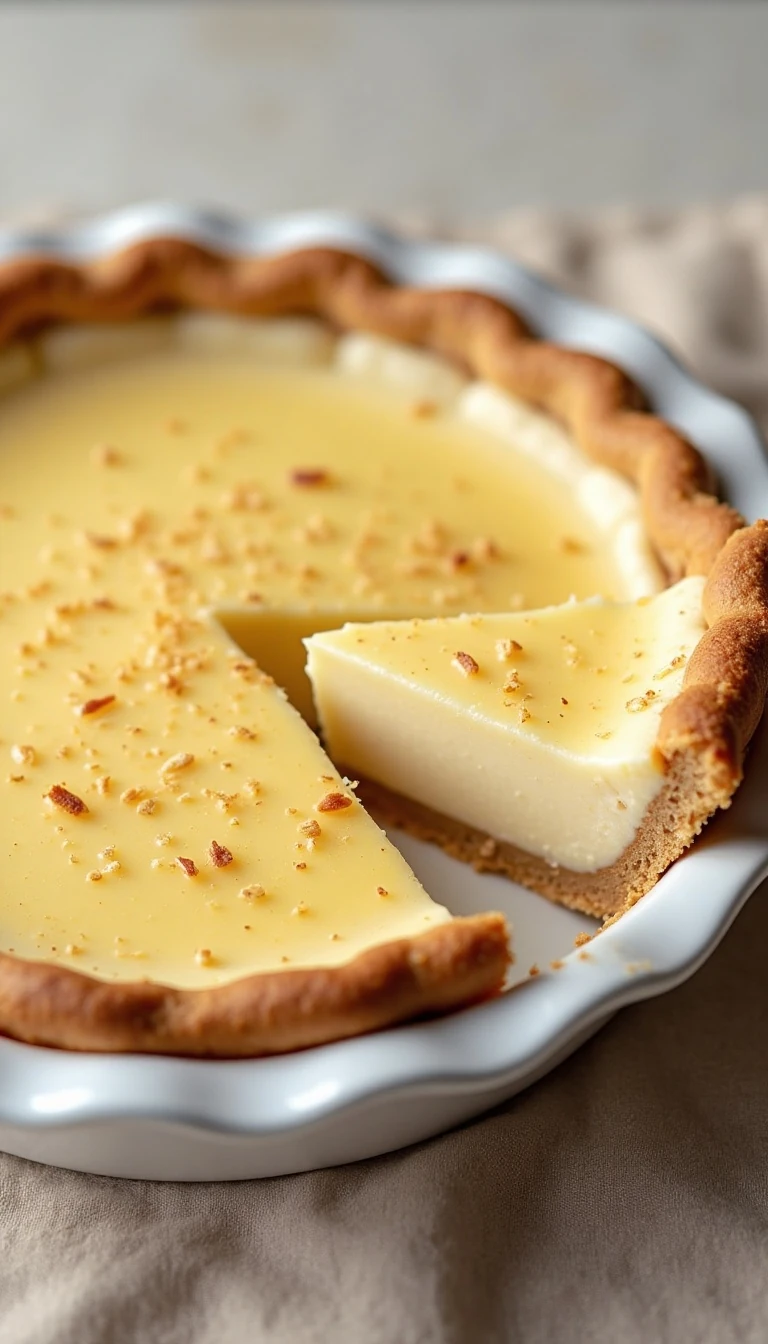
The finished pie is softly sweet, fragrant with vanilla, and filled with tender coconut in every bite. It needs at least 2 hours to cool, allowing the custard to finish setting into a sliceable, silky dessert that is wonderful for holidays, Sunday dinners, or an uncomplicated family treat.
Jump to RecipeWhy You’ll Love This Recipe
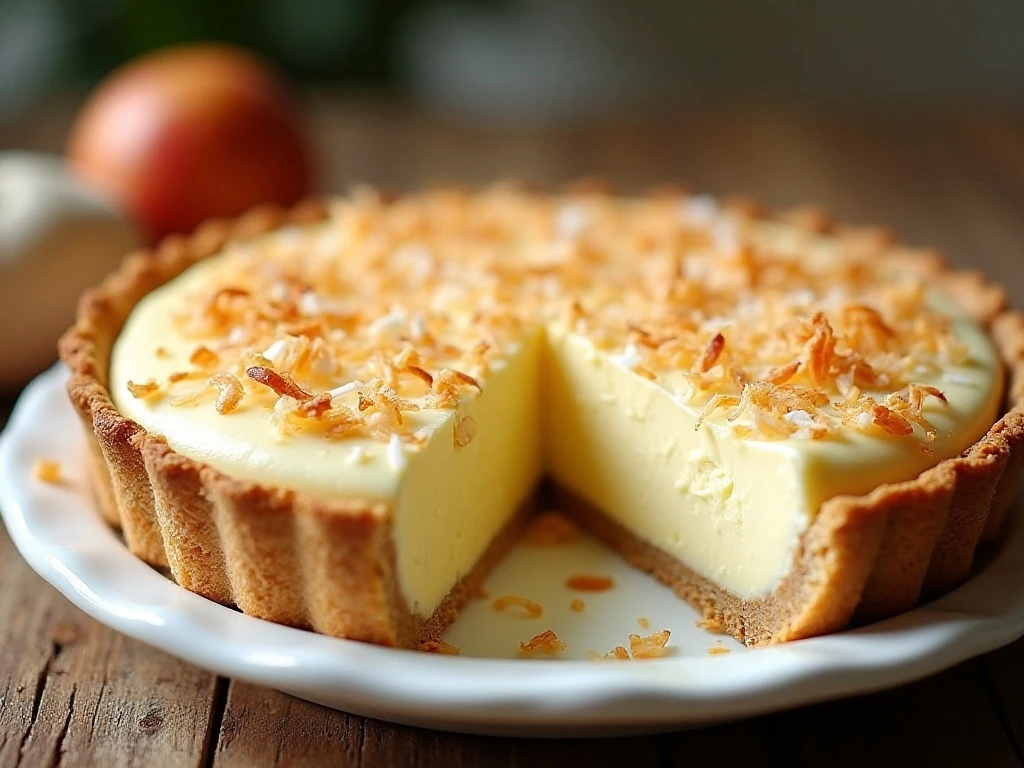
This coconut custard pie is the kind of dessert that looks special without requiring complicated pastry work. A refrigerated crust keeps preparation practical, while the homemade filling comes together in one bowl with everyday ingredients.
The texture lands between a soft pudding and a traditional egg custard. Sweetened coconut adds gentle chewiness and a warm tropical note, while whole milk, butter, and vanilla create a rich but balanced filling.
The two-temperature baking method is especially helpful. The first 10 minutes at 425°F gives the crust a strong start, and the lower 350°F finish cooks the custard more gently so it stays tender instead of turning rubbery.
If you enjoy comforting baked desserts, you may also like these cozy pumpkin pie bombs for a fun, hand-held variation on classic pie flavors.
Ingredients You’ll Need
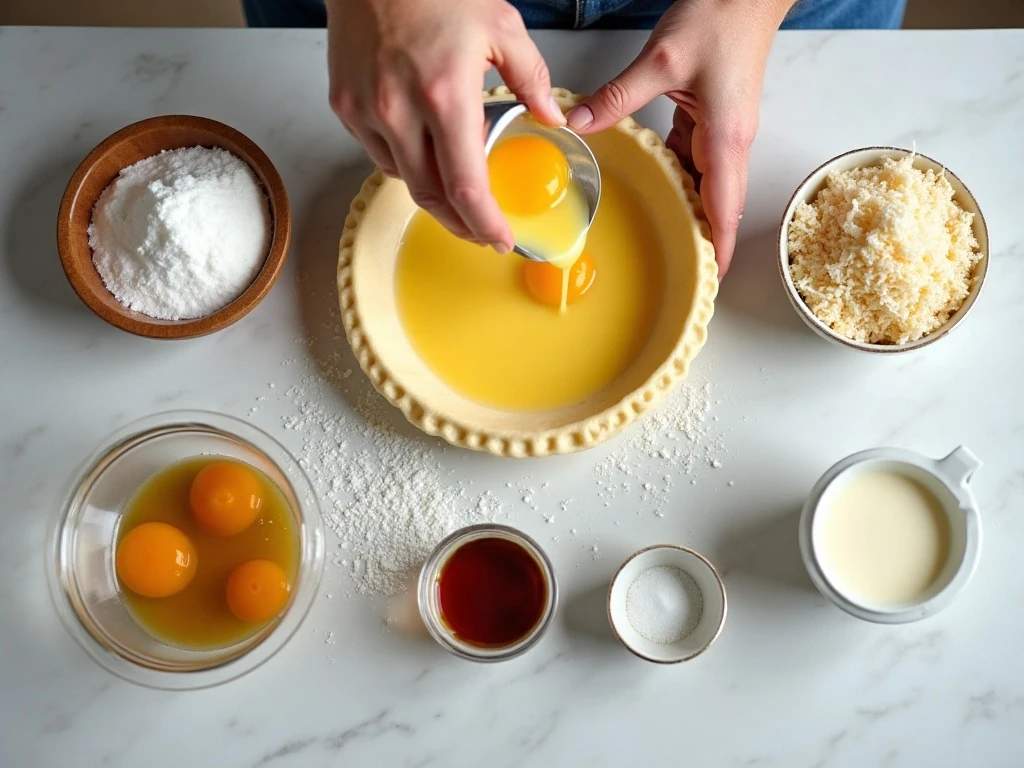
Each ingredient has a clear purpose in this straightforward custard pie. Measure everything before you begin, especially the butter, coconut, and milk, so the filling can be mixed quickly and poured into the crust while the oven is ready.
- Unbaked 9-inch pie crust: Use homemade or refrigerated pastry. Chilling it for 10–15 minutes before filling helps the bottom stay crisper.
- Three large eggs: Eggs provide the structure that turns the milk mixture into a sliceable custard.
- Granulated sugar: Three-quarters of a cup gives the pie its classic sweetness without hiding the coconut flavor.
- Whole milk: The 1 1/2 cups of milk create a smooth, creamy filling.
- Sweetened shredded coconut: One cup supplies the signature flavor and pleasantly soft texture.
- Unsalted butter and vanilla: Melted butter adds richness, while vanilla rounds out the custard.
- Salt and optional nutmeg: Salt sharpens the flavors, and nutmeg contributes a delicate bakery-style warmth.
Sweetened shredded coconut is the traditional choice for this recipe. Unsweetened coconut can be substituted, but plan to add an additional 2–3 tablespoons of sugar to keep the filling properly sweet.
For another recipe featuring coconut in a savory setting, try these crisp coconut shrimp crostini before serving dessert.
How to Make It Step-by-Step
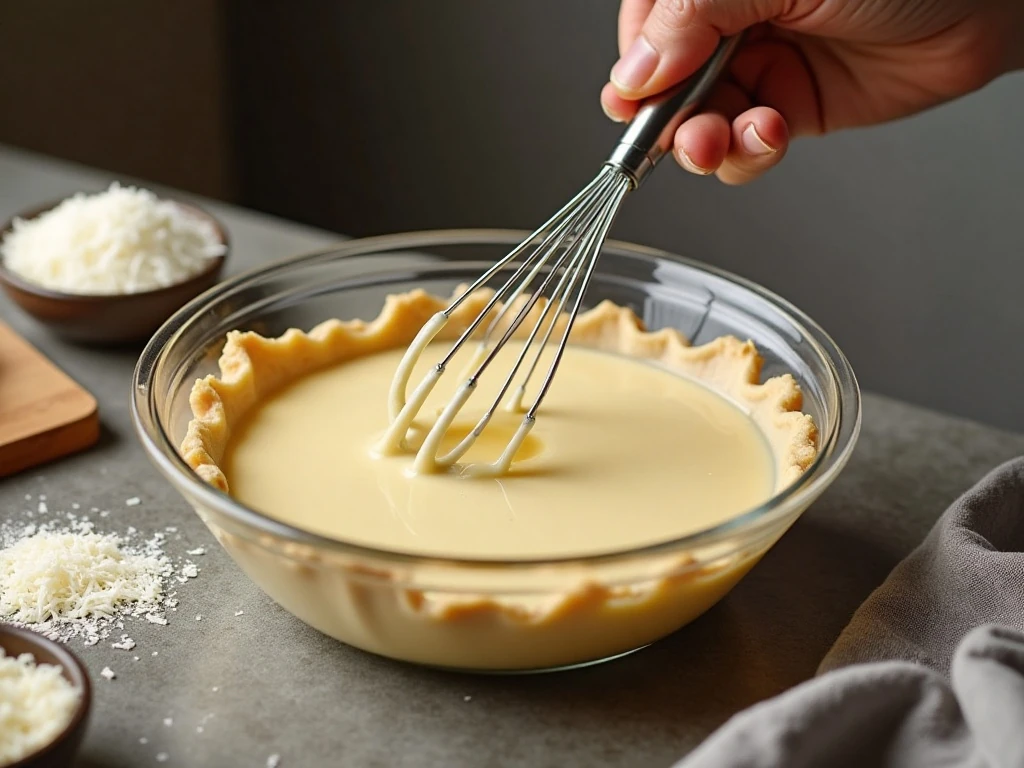
Step 1: Heat the oven to 425°F and prepare the crust. Fit the unbaked pastry into a 9-inch pie plate, gently pressing it into the corners without stretching the dough, then crimp the rim. For a crisper bottom, place the shaped crust in the refrigerator for 10–15 minutes while you gather the filling ingredients.
Step 2: Make the custard base by whisking the eggs and sugar together with the whole milk, melted butter, vanilla extract, and salt. The mixture should look smooth and evenly blended, but stop whisking once it is combined. Excessive whisking adds air, which can cause the pie to puff dramatically and crack as it bakes.
Step 3: Stir in the shredded coconut and optional nutmeg with a spoon or spatula. Mixing the coconut in after the liquid ingredients are smooth helps distribute it evenly without creating a foamy surface.
Step 4: Pour the filling slowly into the chilled or freshly prepared crust. If a few bubbles appear on top, let the pie stand for a minute before baking; avoid aggressively tapping or shaking the pie plate once it is full.
Step 5: Bake the pie at 425°F for 10 minutes. This initial blast of heat helps the pastry begin browning, but watch the rim closely. If the crust is browning too quickly after this first stage, cover the edge with foil or use a pie shield.
Step 6: Reduce the oven temperature to 350°F without removing the pie for long, then continue baking for 35–45 minutes. The outer 2–3 inches should look set, while the center should retain a slight, gentle tremble when the pie is moved.
Step 7: Use an instant-read thermometer if you want an exact doneness check. Insert it into the center without touching the crust or pie plate; the custard should reach about 175–180°F.
Step 8: Transfer the pie to a cooling rack and leave it undisturbed for at least 2 hours. The custard continues to set as it cools, so slicing too soon can produce a loose filling even when the pie was baked correctly.
How to Tell When Coconut Custard Pie Is Done

Visual cues are more useful than waiting for the entire surface to become firm. Look for a set outer ring measuring roughly 2–3 inches from the edge, with a center that trembles slightly rather than sloshes when the pie is gently moved.
A slight jiggle is desirable because residual heat continues cooking the custard after the pie leaves the oven. If the whole surface is completely rigid before cooling, the pie may already be overbaked.
For a more exact method, check the center temperature and look for a reading between 175°F and 180°F. Baking beyond that point can make the custard grainy or watery, so begin checking near the end of the stated baking window.
As the pie cools, the surface may settle slightly. That is normal and does not mean the filling has failed; a fully cooled slice should hold its shape while remaining creamy inside.
Pro Tips for a Creamy, Beautiful Pie

- Cool the butter first: Melt the butter and let it become slightly cool before adding it to the eggs. Very hot butter can make the mixture less uniform.
- Whisk gently: Smooth and combined is the goal, not a large amount of foam. Less air means a calmer surface and fewer cracks.
- Protect the rim: A foil ring or pie shield can prevent the pastry edge from getting too dark during the longer bake at two temperatures.
- Do not skip the cooling period: Give the pie at least 2 hours on a rack before cutting. This is essential for clean slices and a properly set center.
- Choose the right coconut: Sweetened shredded coconut gives the expected classic flavor. If you choose unsweetened coconut, increase the sugar by 2–3 tablespoons.
- Slice with a sharp knife: Wipe the blade between cuts for neat wedges, especially if the pie has been chilled before serving.
For a brunch or afternoon dessert table, serve each slice plain so the vanilla and coconut remain the focus. A small spoonful of softly whipped cream can also add contrast without overpowering the custard.
When planning a full comfort-food menu, pair dessert with a bowl of easy minestrone soup or browse this hearty shepherd’s pie dinner for another satisfying meal idea.
Storage, Serving, and Make-Ahead Advice
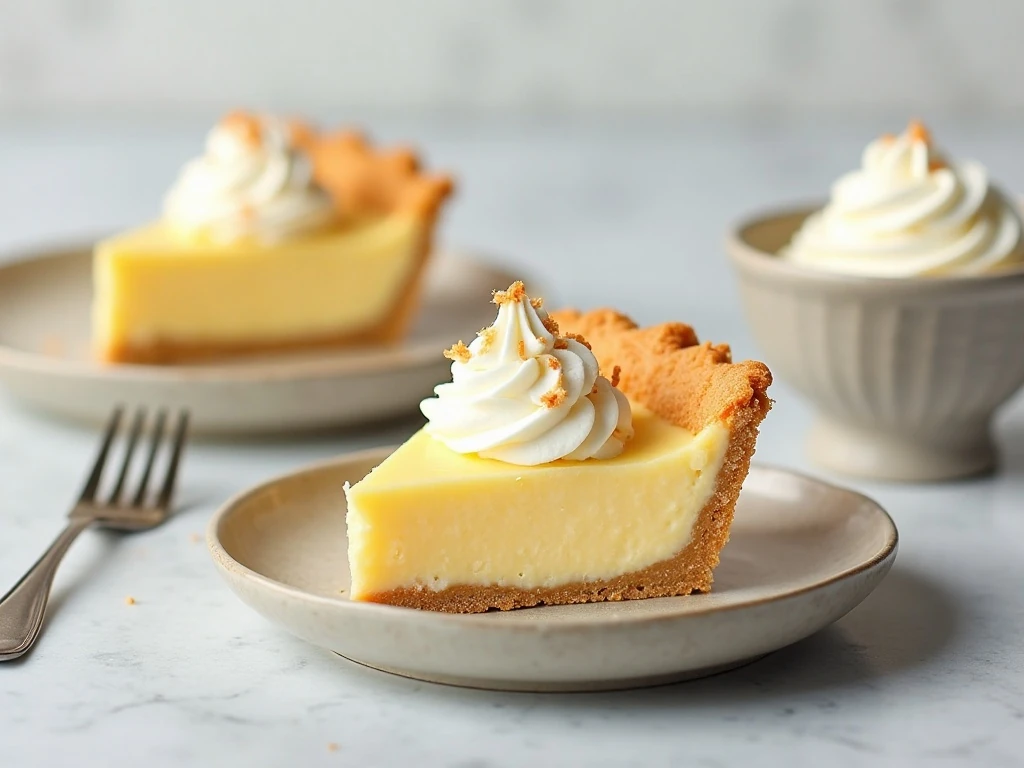
Once the pie has cooled completely, cover it and refrigerate leftovers. Chilling helps preserve the custard texture and makes the pie easy to slice the next day.
Serve the pie cold, cool, or close to room temperature depending on your preference. A chilled slice is particularly neat and firm, while a slightly warmer slice has a softer, silkier mouthfeel.
This pie is a useful make-ahead dessert because the cooling time is part of the recipe rather than an afterthought. Bake it earlier in the day, allow the full 2 hours of cooling, then refrigerate it until you are ready to serve.
For a sweet breakfast pairing, a slice alongside our easy cinnamon bread makes a welcoming weekend spread. Keep the portions modest, since both treats are rich and satisfying.
Coconut Custard Pie
Ingredients
Method
- Heat the oven to 425°F. Fit the unbaked crust into a 9-inch pie plate, crimp the edges, and chill it for 10–15 minutes if you want a crisper bottom.
- Whisk the eggs, sugar, whole milk, melted and slightly cooled butter, vanilla extract, and salt in a bowl until smooth. Whisk only until combined, since incorporating too much air can make the custard puff and crack.
- Stir in the sweetened shredded coconut and optional ground nutmeg. Pour the filling into the prepared unbaked crust.
- Bake at 425°F for 10 minutes. Reduce the oven temperature to 350°F and continue baking for 35–45 minutes.
- Check the pie when the outer 2–3 inches look set and the center still trembles slightly when the pie is gently moved. For a precise check, the center should reach about 175–180°F.
- Cool the pie completely on a rack for at least 2 hours before slicing. Refrigerate any leftovers in a covered container or tightly covered pie plate.
Notes
Final Thoughts
This coconut custard pie recipe delivers classic comfort with very little fuss: one unbaked crust, a gently whisked milk custard, sweetened coconut, and a carefully controlled bake. The key details are simple but important—avoid overmixing, protect the crust edge if needed, watch for the slight center jiggle, and allow at least 2 hours for cooling.
Once sliced, the pie offers a golden pastry edge, creamy vanilla custard, and tender coconut throughout. Keep the recipe close for holidays, potlucks, and relaxed family dinners whenever you want a dependable dessert that tastes homemade and looks beautifully traditional.