This Broccoli Rabe and Pancetta Pasta is a flavorful 40-minute dinner made with 12 ounces of short pasta, tender blanched broccoli rabe, crisp pancetta, garlic, red-pepper flakes, Parmesan, and reserved pasta water. Blanching the broccoli rabe first softens its natural bitterness, while the starchy water creates a light sauce that clings beautifully to every piece of orecchiette or penne.
The finished pasta is savory, lightly spicy, garlicky, and pleasantly balanced with a touch of lemon juice. It is rich enough to feel comforting without using cream, making it an excellent weeknight meal for four when you want an Italian-inspired dinner with plenty of character.
Jump to RecipeWhy You’ll Love This Recipe
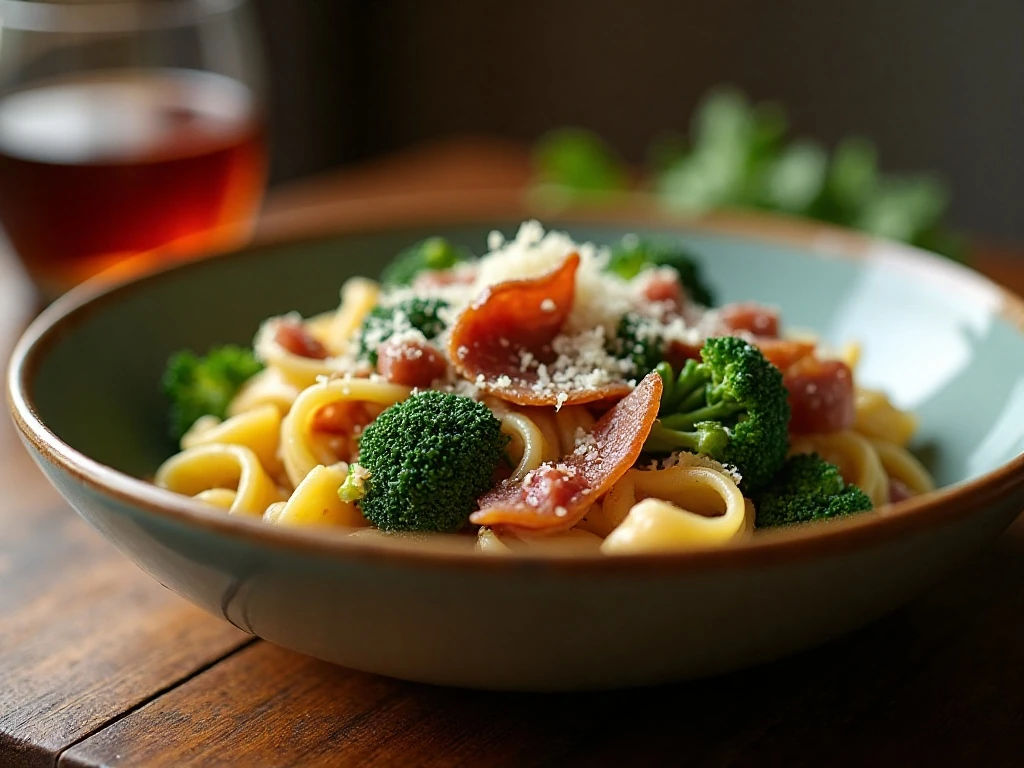
This pasta brings together bold ingredients in a remarkably simple way. Bitter broccoli rabe, salty pancetta, sharp Parmesan, fragrant garlic, and chile flakes create layers of flavor without requiring a heavy cream sauce or a long list of steps.
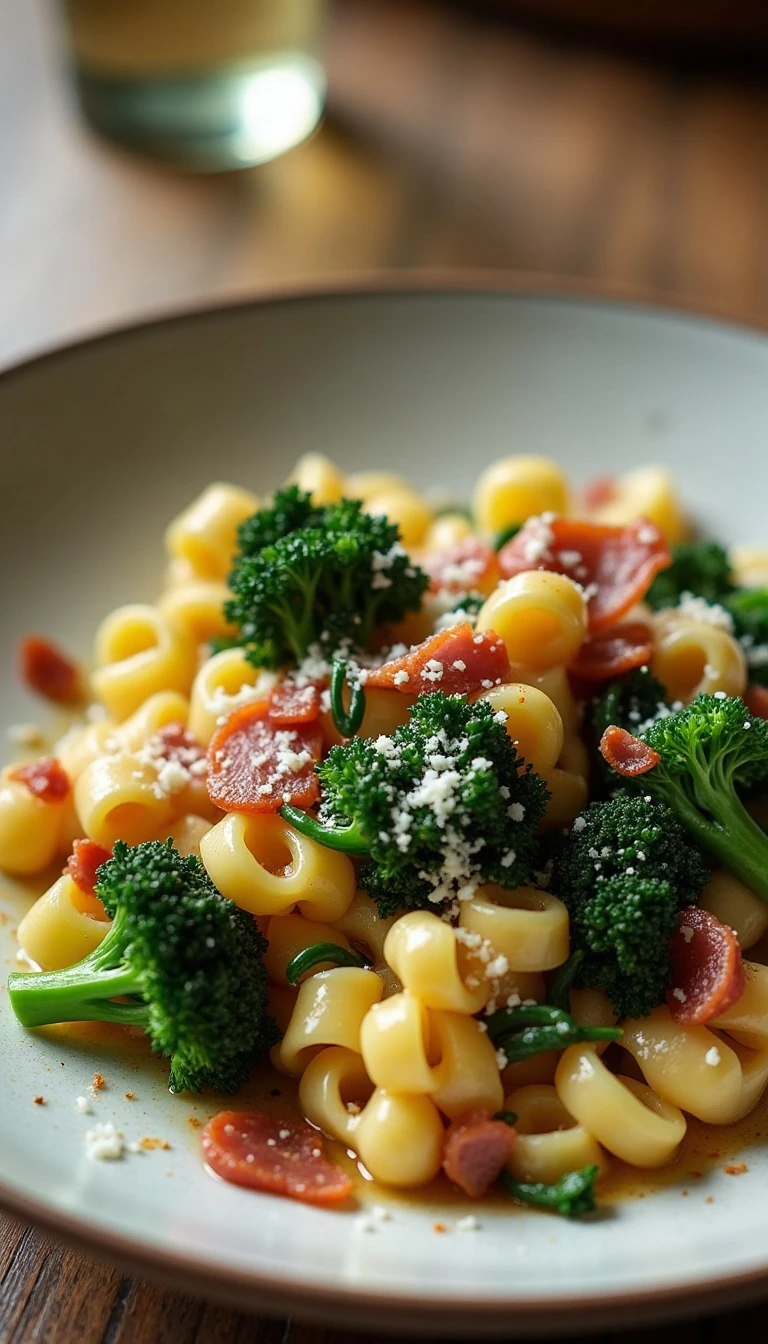
Orecchiette is especially enjoyable here because its small cups catch bits of pancetta, chopped greens, and Parmesan. Penne works just as well, particularly if that is what you already have in the pantry.
The sauce is made in the skillet with rendered pancetta fat, olive oil, Parmesan, and pasta water. It is light but glossy, with enough savory richness to make the dish satisfying while allowing the broccoli rabe to remain the star.
If you enjoy pasta dishes that combine salty meat with vegetables, you may also like this bacon, spinach, and caramelized onion pasta for another comforting dinner idea.
Ingredients You’ll Need
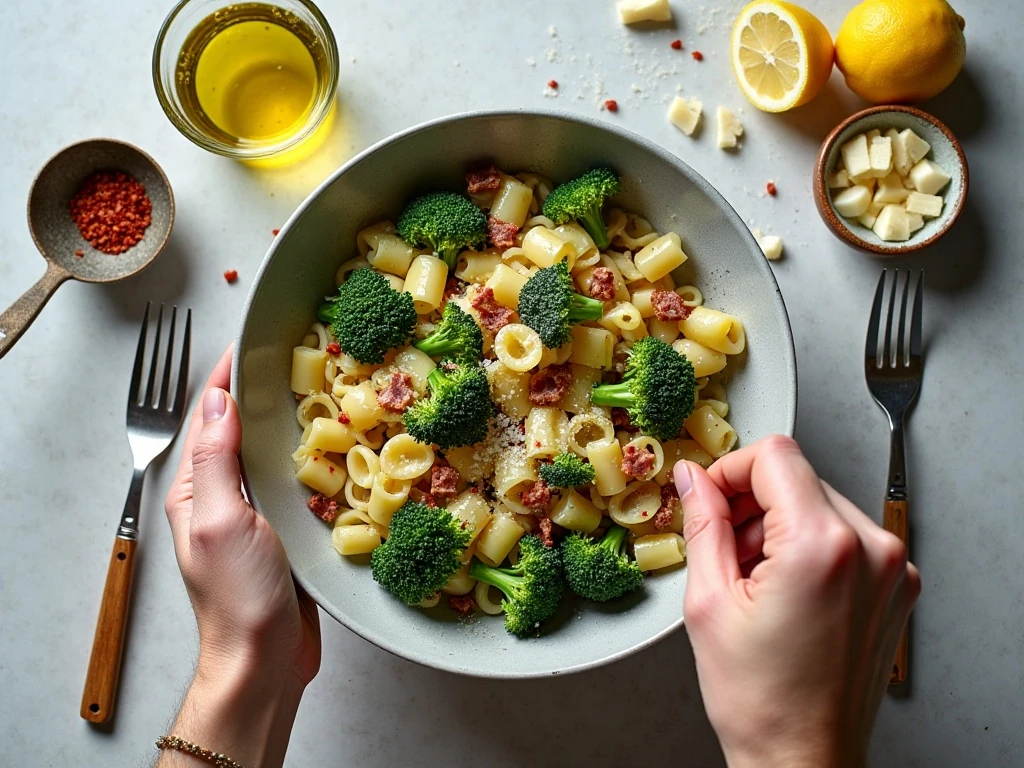
Each ingredient has a specific job, so gather everything before you begin. The broccoli rabe is prepared separately from the pasta, but both use the same pot of water, which keeps cleanup manageable.
- Short pasta: Use 12 ounces of orecchiette, penne, or another short shape. Orecchiette is traditional and holds the small pieces of filling exceptionally well.
- Broccoli rabe: Choose one large bunch weighing about 12-16 ounces. The stems, leaves, and tender florets can all be used once the tough ends are trimmed.
- Pancetta: Four ounces, diced small, will crisp in the skillet and season the entire dish with its savory pork flavor.
- Olive oil and garlic: Two tablespoons of extra-virgin olive oil help start the pan sauce, while three to four garlic cloves add warm fragrance.
- Chile and cheese: A quarter teaspoon of crushed red-pepper flakes adds gentle heat, and half a cup of finely grated Parmesan thickens and seasons the sauce.
- Finishing ingredients: Kosher salt, black pepper, at least one cup of reserved pasta water, and one tablespoon of lemon juice if you want extra brightness.
For a more distinctly Roman or southern Italian flavor, Pecorino Romano may be used in place of Parmesan. Keep the quantity at about one-half cup and taste before adding extra salt because Pecorino is often saltier.
For another make-ahead-friendly pasta idea, take a look at this tuna pasta salad, which uses a completely different flavor profile but is also handy for casual meals.
How to Make It Step-by-Step
Step 1: Trim the broccoli rabe by cutting away the tough lower ends, then cut the remaining stems and leaves into pieces about 1 inch long. Wash the greens thoroughly, especially around the florets, where grit can hide.
Step 2: Bring a large pot of well-salted water to a strong boil. Add the broccoli rabe and blanch it for 2-3 minutes, until the stems are just tender and the leaves have wilted.
Step 3: Transfer the blanched greens to cold water to stop the cooking, then drain them thoroughly. Squeeze gently or pat them dry; excess water can dilute the skillet sauce and prevent the pancetta from staying crisp.
Step 4: Return the blanching water to a boil and cook the pasta according to the package directions until al dente. Before draining, scoop out at least 1 cup of pasta water and keep it nearby because it is essential to bringing the sauce together.
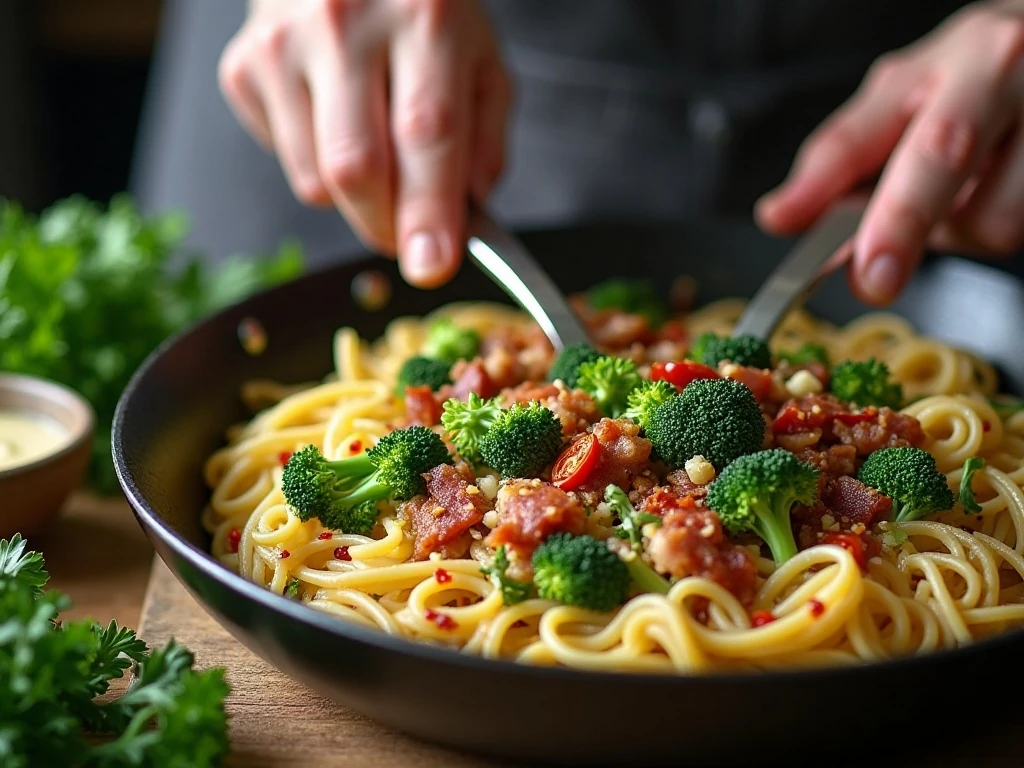
Step 5: While the pasta cooks, heat 1 tablespoon of olive oil in a large skillet over medium heat. Add the diced pancetta and cook for 5-7 minutes, stirring occasionally, until the pieces are browned and crisp and some of their fat has rendered into the pan.
Step 6: Add the remaining tablespoon of olive oil, the sliced or minced garlic, and the red-pepper flakes. Stir for only 30-60 seconds, just until the garlic smells fragrant, since scorched garlic can make the whole dish taste harsh.
Step 7: Add the drained broccoli rabe to the skillet and sauté for 2-4 minutes. Season lightly with salt and black pepper, remembering that the pancetta and Parmesan will add more salt later.
Step 8: Add the drained pasta and about 1/2 cup of reserved pasta water to the skillet. Toss over medium heat until the water combines with the olive oil and pancetta fat to lightly coat the pasta, adding more water a splash at a time if the skillet looks dry.
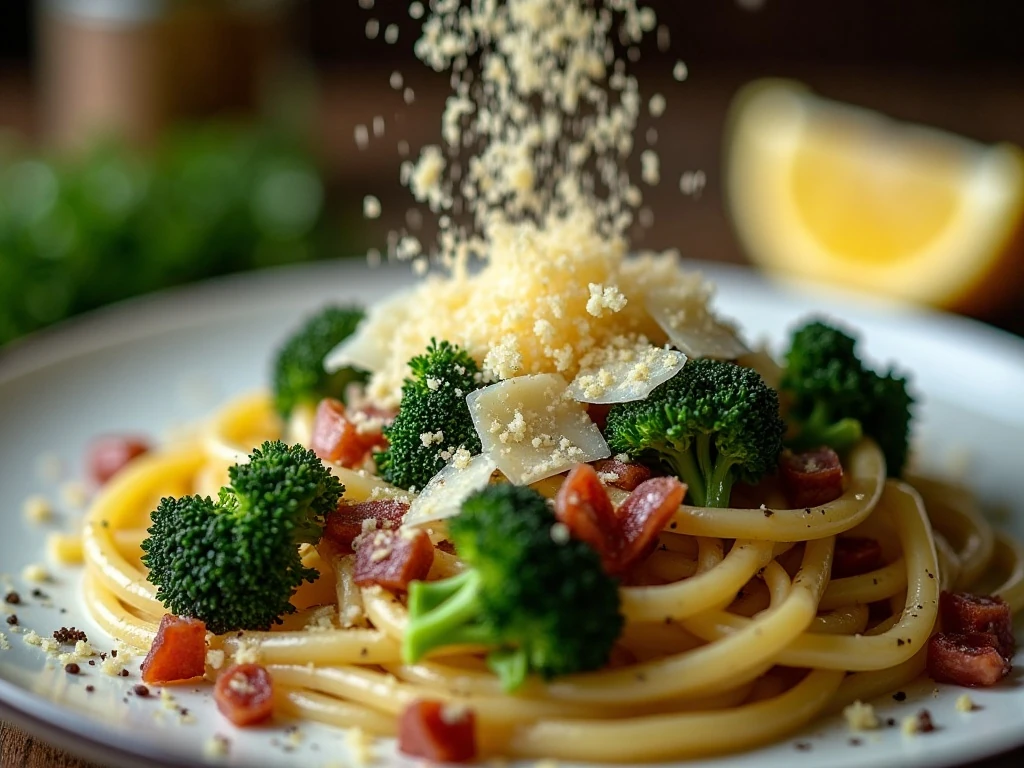
Step 9: Remove the skillet from the heat before adding the Parmesan. Toss vigorously so the cheese melts into the starchy liquid, then add lemon juice if desired and taste for salt, pepper, and chile heat.
Step 10: Divide the pasta among four bowls and finish each portion with more Parmesan, freshly ground black pepper, and a small drizzle of olive oil. Serve immediately while the pancetta is crisp and the sauce is glossy.
Pro Tips for the Best Pasta
Do not skip blanching the broccoli rabe. This short boil softens the bitterness and ensures the stems become tender at the same time as the leaves, giving the finished pasta a more balanced texture.
Drain the greens very well after blanching. Water clinging to the broccoli rabe can cause the pancetta fat to splatter and may make the finished sauce watery rather than lightly emulsified.
Keep the garlic and red pepper moving in the skillet. They need only 30-60 seconds to become aromatic, and adding them after the pancetta has rendered gives them enough fat to release their flavor without burning.
Reserve more pasta water than you expect to use. The starch helps the rendered pancetta fat, olive oil, and Parmesan cling to the pasta, so a dry-looking skillet can usually be corrected with one or two extra tablespoons.
If your broccoli rabe is especially assertive, blanch it for 3-4 minutes rather than 2 minutes. A tablespoon of lemon juice added at the end also helps balance the greens without hiding their pleasant, earthy flavor.
For a vegetable side with familiar comfort-food appeal, serve small portions of broccoli cheese casserole alongside the pasta, though the pasta is already a complete meal on its own.
Serving Suggestions
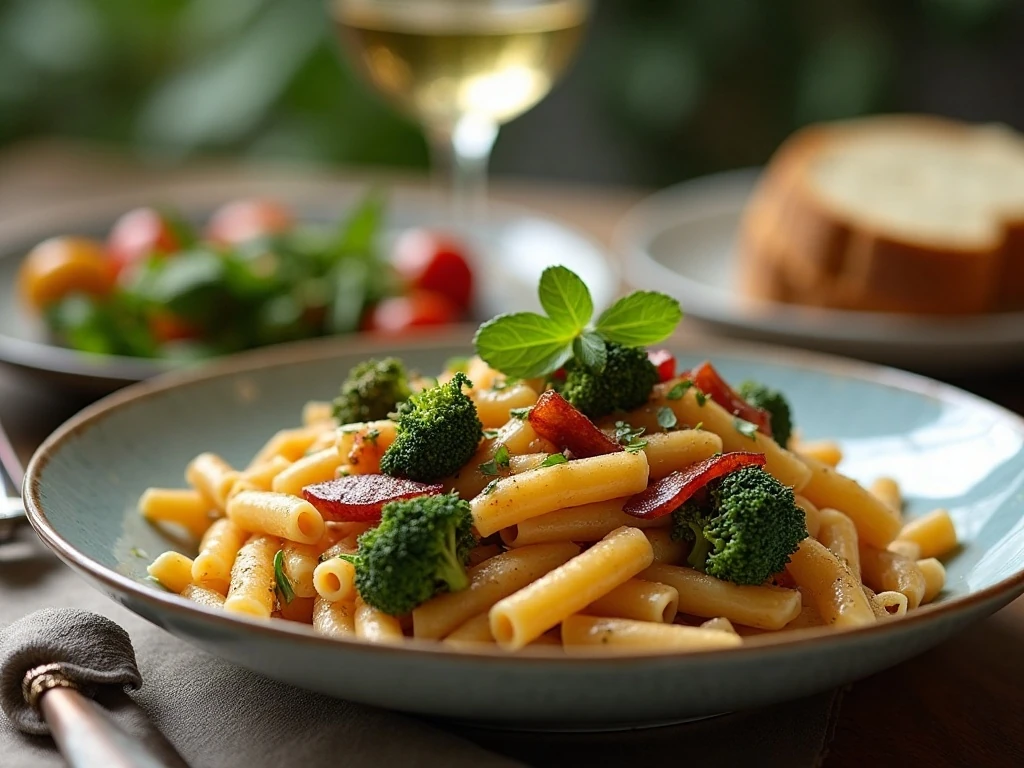
This dish is best served hot, straight from the skillet, while the cheese is still soft and the pancetta has its crisp texture. A simple green salad dressed with lemon and olive oil makes a fresh contrast to the savory pasta.
Crusty bread is useful for catching the last bit of garlicky oil at the bottom of the bowl. If you are serving wine, choose a crisp white or a light-bodied red that will not overpower the broccoli rabe and chile.
For a larger Italian-style dinner, start with a small appetizer and keep the portions modest because the pasta is rich with pancetta and Parmesan. A creamy seafood starter such as hot crab dip can work for a special gathering, although it is not necessary for a weeknight meal.
Storage and Reheating
Cool leftovers promptly and place them in an airtight container in the refrigerator. They are best enjoyed within a few days, though the broccoli rabe will soften slightly and the pancetta will not remain as crisp as it is when freshly cooked.
Reheat the pasta gently in a skillet over medium-low heat with a splash of water. Stir often until warmed through, then finish with a little Parmesan, black pepper, and olive oil to refresh the flavors.
Microwaving also works for a quick lunch: cover the bowl loosely, heat in short intervals, and stir between each interval. Add the water gradually so the pasta loosens without becoming soupy.
If you are planning a casual buffet, a cold pasta salad may be more practical than reheating this dish. This chicken club pasta salad is a useful alternative for gatherings where guests serve themselves over a longer period.
Broccoli Rabe and Pancetta Pasta
Ingredients
Method
- Trim the tough ends from the broccoli rabe, then cut the stems and leaves into roughly 1-inch pieces. Wash the greens thoroughly to remove any grit.
- Bring a large pot of well-salted water to a boil. Blanch the broccoli rabe for 2-3 minutes, until the stems are just tender and the leaves are wilted, then transfer it to cold water, drain well, and squeeze or pat dry.
- Return the water to a boil and cook the pasta until al dente according to the package directions. Before draining, reserve at least 1 cup of the cooking water.
- Heat 1 tablespoon of olive oil in a large skillet over medium heat. Add the diced pancetta and cook for 5-7 minutes, stirring occasionally, until browned and crisp.
- Add the remaining olive oil, garlic, and red-pepper flakes to the skillet. Cook for 30-60 seconds, just until fragrant, taking care not to let the garlic burn.
- Add the blanched broccoli rabe and sauté for 2-4 minutes. Season lightly with kosher salt and freshly ground black pepper.
- Add the drained pasta and about 1/2 cup of reserved pasta water to the skillet. Toss over medium heat until the pancetta, oil, and water form a light coating around the pasta, adding more water as needed.
- Remove the skillet from the heat and toss in the Parmesan cheese. Add the lemon juice if using, then serve with more Parmesan, black pepper, and a drizzle of olive oil.
Notes
Final Thoughts
Broccoli Rabe and Pancetta Pasta is the kind of dinner that tastes far more involved than it really is. In about 35-45 minutes, you can turn a few sturdy ingredients into a bowl of pasta with crisp pancetta, tender greens, fragrant garlic, gentle chile heat, and a savory Parmesan finish.
The most important details are simple: blanch the broccoli rabe, save plenty of pasta water, and protect the garlic from burning. Those steps keep the greens pleasantly balanced and help the light skillet sauce coat the pasta instead of pooling at the bottom.
Make it with orecchiette for the most traditional presentation, or use penne when you want a dependable pantry dinner. Add lemon at the end, pass around extra Parmesan, and enjoy this hearty vegetable-forward pasta while it is hot.